




Entrepreneurs may be the most fabled members of American society and are often given credit for making the country thrive through their ingenuity. According to the U.S. Chamber of Commerce, small businesses employ almost 62 million people in the country, representing 46% of the workforce. They are widely seen as the gateway to the “American dream,” fueled in large part by an entrepreneur’s vision, sweat equity, and willingness to sacrifice and take risks. They can have meager beginnings; more than half of small businesses begin with investments of less than $25,000, and a third start with less than $5,000. They are idea incubators, applying for more patents per employee than larger businesses, as shown by Small Business Administration data. The companies began by entrepreneurs can start small and then grow, transforming the way that people live their lives around the globe. These trailblazers drive the economy, enable societal progress, and are a principal reason humanity continues to evolve generation after generation.
Howard University and the members of its community have not been content to be mere spectators in the arena of business creation. For decades, the university has been intentional about creating an environment that nurtures the entrepreneurial spirit, leading scores of alumni to incorporate companies after graduation. Just as important, students have jumped into the commercial pool even as they pursue their studies, turning their ideas into reality as a practical application of the skills they are learning in the classroom, gaining invaluable real-time insight from faculty members and making critical connections with people who can help them get the resources and investments they need to thrive. These students continue to redefine the meaning of the “Howard hustle.”
Entrepreneurship is promoted across Howard’s campus, especially within the School of Business. Students are exposed to key entrepreneurial concepts as early as during their freshman orientation course, and are drilled into developing competencies key to launching a business such as idea generation, presentation, and pitching. In core courses related to marketing, finance, investment, management, negotiation, and accounting, many faculty members push students to use the skills they are developing not just as conduits for employment with established corporations, but instead to bring their own commercial dreams to fruition.
Nestled within the School of Business building is a matrix of entrepreneurial support. The U.S. Small Business Administration has partnered with Howard to establish the nationally-accredited Small Business Development Center, which provides high-quality one-on-one consulting, training, and information resources to empower new and existing businesses in the District of Columbia, including Howard students and other members of the community. The center has aided over a thousand clients.
The Howard University and PNC National Center for Entrepreneurship is a hub for entrepreneurial leadership. Not only does it provide training and resources for Howard students, but it extends its programming across the country through satellite centers at other HBCUs. Each year, it hosts a major conference which attracts burgeoning entrepreneurs from HBCUs across the country and engages them in workshops, panel discussions, and networking opportunities with successful business owners who provide one-of-a-kind expertise.
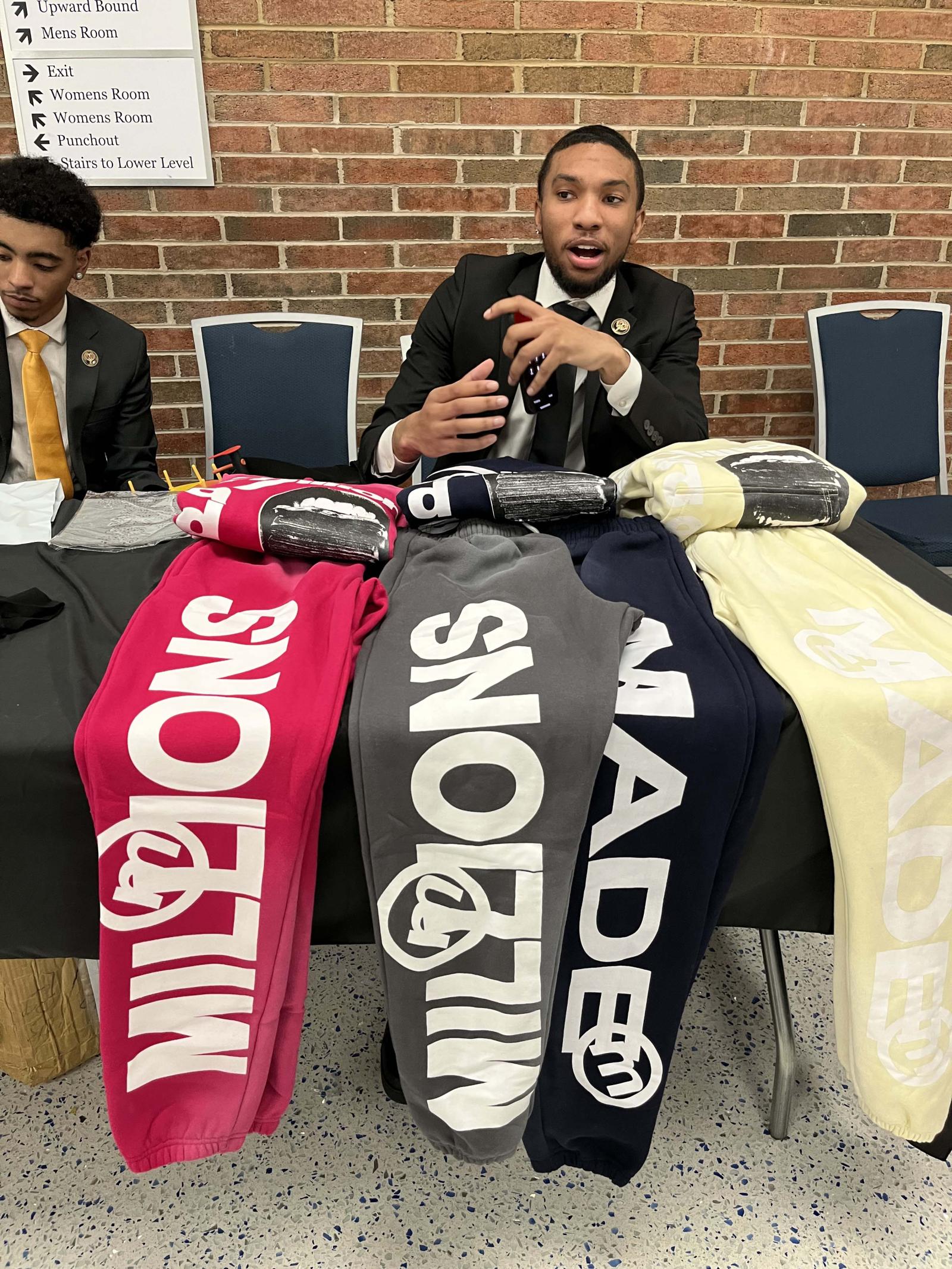
Support for entrepreneurs does not only exist within the School of Business, however, nor is it limited to academic units. As per Howard tradition, students aren’t simply relying on faculty to point the way. They are independently finding ways to produce products, deliver services, and leverage technological advances. Many are aggressively seeking mentorship and seizing opportunities to engage the numerous business owners who frequent campus as speakers and vendors. Several student-led organizations, such as the Howard University Entrepreneurial Society, are devoted to fostering learning, connection-building, and low-risk experiences in small business management. Other organizations, including the Howard University Student Association (HUSA) have long supported student businesses as part of their core programming. As a freshman, HUSA Executive President Naesoj Ware and student Shania Jerome started the @howarduhustles Instagram page, which showcases student entrepreneurs and connects them with potential patrons who may be looking for their services. The initiative is now central to the current HUSA administration’s focus on empowering student business owners by helping them promote their products and services, connecting them with alumni who have expertise and resources they can share, and working with the administration to develop policies which create a supportive environment for the burgeoning enterprises.
“A lot of students expressed feeling like there’s a lack of visibility about their businesses and a lack of resources to legitimize and advance them, so we wanted to be able to connect students not only with local D.C. residents but also to alumni who can help these students, so we can eventually build a pathway to success from student business creation at Howard to success beyond Howard,” said Ware.
Although the rise of online sales behemoths like Amazon and Walmart has completely changed the global commercial landscape, many student and alumni entrepreneurs have taken advantage of the technology to establish purchasing and distribution platforms that would not previously have been available for smaller businesses, including sole proprietors. Likewise, while chain restaurants continue to expand, Howard alumni have embraced a countertrend where “foodies”are looking for high-quality cuisine. Beyond retail and food services, Howard alumni have established businesses in an array of commercial lanes, from real estate to hospitality.
As they use entrepreneurship as a vehicle to carry forth “truth and service,” Howard students and alumni are continuing to change the game.
Howard University’s approach to entrepreneurship is uniquely comprehensive. For decades, Howard’s School of Business has served as an entrepreneurial nexus, incorporating in-person and online courses for undergraduates and MBA candidates, community-facing programs, and high school programs into its unique ecosystem. Beyond the School of Business, other academic units are delivering instruction in entrepreneurship unique to specific professions and fields. In addition, student-led organizations have made their own opportunities to showcase student businesses, hosting pop-up vendor fairs, workshops, and networking sessions.
Howard’s academic approach involves both theory and practice. Faculty members embrace the natural drive and enthusiasm of students who have novel ideas and expose the students to comprehensive business management theory, experienced business owners, and potential mentors, investors, and resource networks. Helping students prepare to succeed is important to these faculty members, so Howard’s emerging business leaders don’t become one of the 50% of small business owners who fail in their f irst year, many due to a lack of a workable business plan, access to capital, or realistic revenue projections.
Robert Singh, Ph.D., is the Dr. Abraham Pishevar Endowed Chair of Finance and Entrepreneurship in the School of Business at Howard and a former professor at Morgan State University. The author of three books and dozens of research papers on entrepreneurship, technology, and commercial opportunity, he is a founding member of the board of the national Collegiate Entrepreneurs Organization (CEO) and founded three businesses of his own. He teaches entrepreneurship and is particularly concerned about weak entrepreneurial ecosystems in Black communities, which can involve a lack of access to mentors, discrimination in lending, lack of financial literacy, unfair public policy administration, and other factors. He wants students to understand how to turn an idea into an opportunity by ensuring key elements such as target markets, optimal locations, and financing are in place before businesses are launched. In order to pass his class, his students have to construct a complete business plan. According to Singh, it’s worth the time.

“When I’m teaching entrepreneurship to my students, I try to get them out of the idea that I’m just going to go viral on a social media platform,” he said. “Whatever industry their idea is in, I think they should have some significant experience in that industry or enlist someone on their team who does. They need to have a really strong idea of who your target market is. Rarely does marketing to everyone actually work. Also, I’m really big on financial literacy. There’s a big difference between revenue and profit. In addition, students need to understand their business’ sustainable competitive advantage. Your business is not going to be sustainable in the long run if you’re no different from your competitors.”
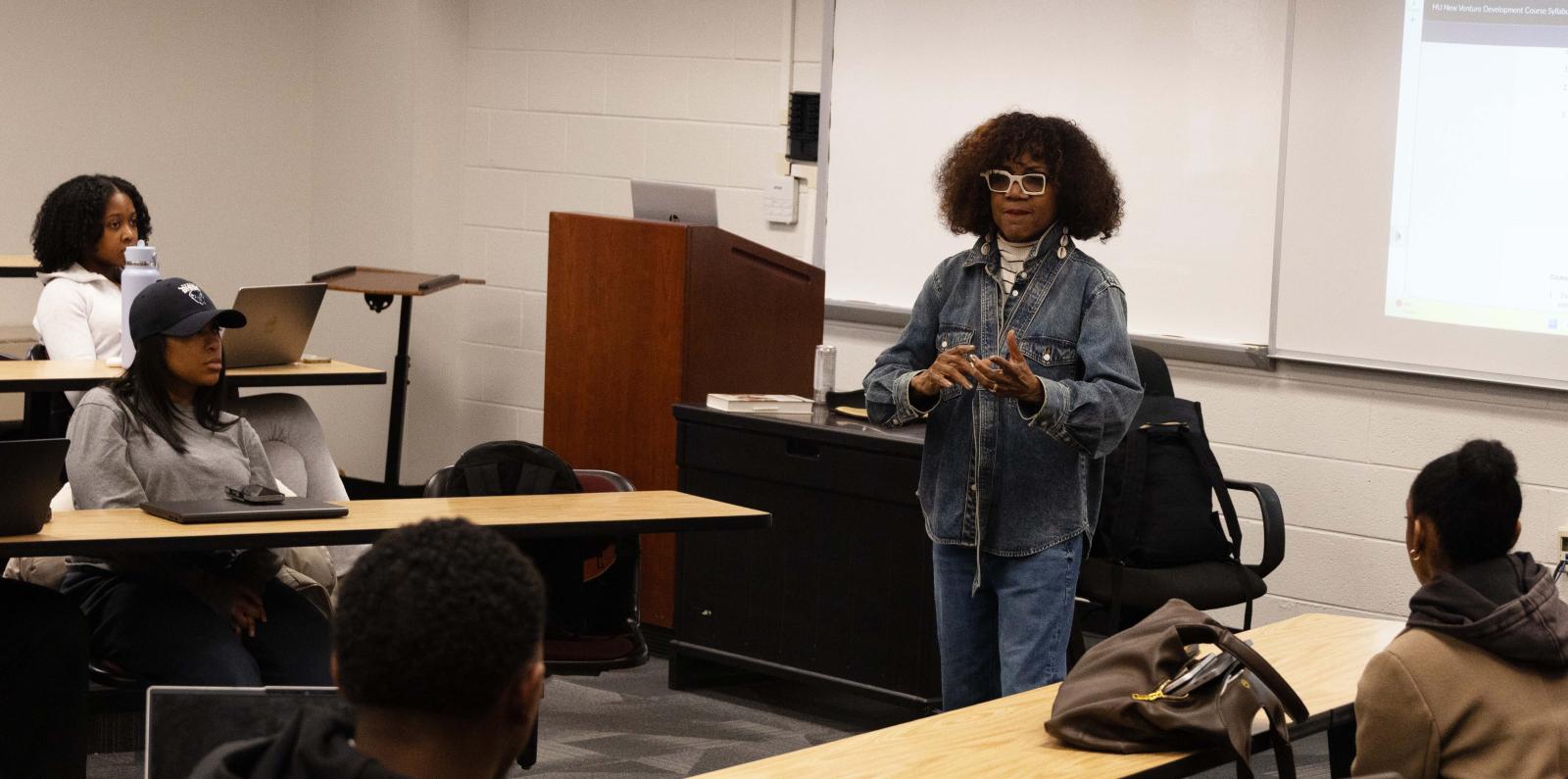
Cathy House has been teaching entrepreneurship at Howard for 20 years based on her over 30 years as a business owner. She also serves as a consultant for both startups and established businesses. She believes that students don’t learn as much from theory as they do from action, so she focuses on experiential learning. As part of her courses, she guides students through an entrepreneurial externship, where they shadow a successful business owner and chronicle what they are learning. In addition, she also teaches small business management and new venture development courses. House also launched an entrepreneurship pitch competition, which she incorporates into her coursework. Students present their business plans to judges who are successful business owners and nonprofit leaders and win funding for their businesses. She believes that Blacks need multiple streams of income.
“I don’t want students to have ‘paralysis of analysis’ and have all these business plans they do nothing with, so we ‘take it to the street,’” House said. “I prepare them for the real world. I want them to realize that working for someone is not the end-all-be-all. It should be a temporary situation. You should be gathering tools and resources. We as a people need to be thinking about how we leave a legacy for our children and our children’s children.”
Entrepreneurship education isn’t pigeonholed in the School of Business, however. For example, Howard alumna Sidnea Lewis returned to Howard after launching a career as an independent graphic designer to help students in the College of Fine Arts understand the process. She is the child of two entrepreneurs and started her business as a student. Her first few years as an entrepreneura were frustrating, so she hopes to help creative-focused students have a smooth process in setting up shop. She tells students that their professional success will not be based solely on being creative, but will also depend on being 100% accountable for their work and how they sell themselves, and how they present themselves at every level. Having a solid business foundation is critical to avoiding burnout as a business owner, Lewis said, which impacts the joy of artistry. According to her, the key is to accept responsibility and build the habits of success into your everyday life, creating small successes and then turning them into larger ones.
“How you do anything is how you do everything,” she said. “I saw my parents run businesses, but it is different being on the outside looking in versus doing it.”
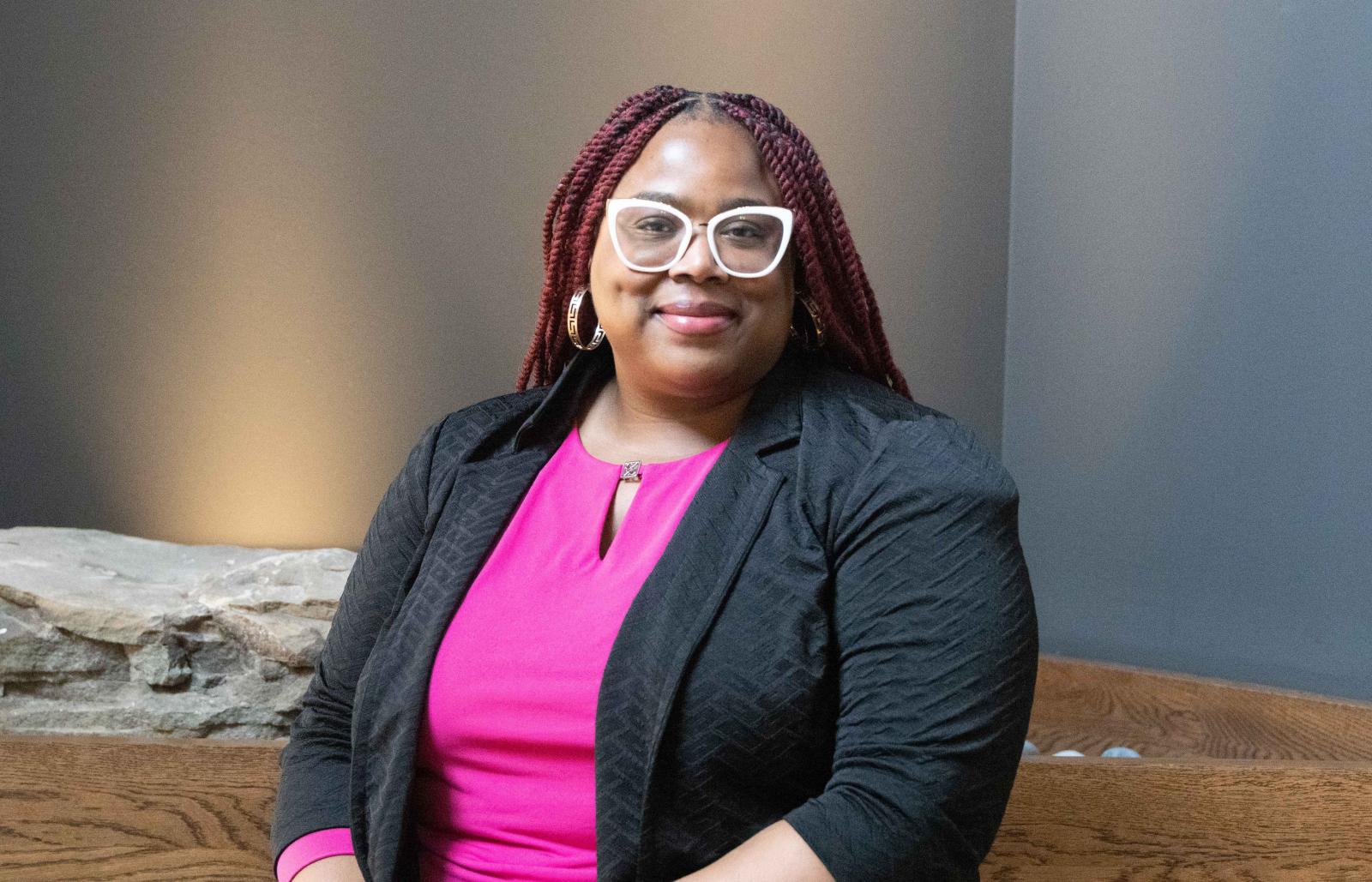
As an artist herself, Lewis understands that creativity comes from within and can require motivation, which is not always compatible with timelines. She works with students on time management and project management, so they can ensure they meet deadlines even as they work through the creative process. Her goal is to ensure that students are confident in pitching their businesses, gaining clients, submitting proposals and following up, networking, and operating their enterprise.
“In the business course, I walk them through a full business plan, including everything you could think of in terms of running a business,” she said. “We talk about making a template for the future of their companies, from branding to marketing plan to pricing, invoices, and where you are going to bank. We discuss getting your registration, set up costs versus recurring costs, contracts and invoices, what services you are going to provide and having a production plan.”
Beyond the classroom, students are taking responsibility for their own growth as entrepreneurs through the Howard University Entrepreneurship Society (HUES). Founded in the 1990s, the organization works to provide access to entrepreneurial tools for every member, establish vibrant connections within the entrepreneurial community, and fuel growth journeys through mentorship and personal and professional development. Among its most successful events are “pop-up shops,” where student business owners create a market on campus to sell their wares and promote their services. They also help students find out how to look for venture capital. The supportive community the organization helps create for its members is critical for students as they try to balance being a student and owning a business.
“Being able to start a business is so important because you are able to see the fruits of your labor after all of the hard work you put in,” said Trinity McDowell, HUES president. “You see it grow. If you work for a company, you may put in the hard work, but it may not be seen or valued. When you start a company that is your own, you know your work is valued and you know it is important.”

Barron H. Harvey, Ph.D., CPA, the associate provost of academic innovation and strategic initiatives, is dean emeritus of the School of Business. As dean, he was instrumental in building much of the school’s ongoing infrastructure and programming supporting entrepreneurs at every level. He led the school in expanding its outreach to the community, including the launch of the Howard University and PNC National Center for Entrepreneurship and a highly successful high school program in entrepreneurship. Under his leadership, the programs administered by the university provided thousands of dollars in support for student entrepreneurs and others. Harvey realized that, even before they are college-aged, young people can have explosive ideas that can be transformative in business.
“When students come from high school to our campuses, many of them have already started an enterprise and activity within their high school and they bring it to campus or they have ideas. They need tools to continue to move forward.”
Harvey sums up Howard’s multifaceted approach to entrepreneurship by explaining why it is a university-wide priority. The impact of the programming is not just important for student success, but also highly consequential for communities around the country. Howard’s job, he said, is to ensure that Howard students and graduates are prepared for the leadership others expect of them.
“Howard’s focus has been to enhance the community not only through education but experiential activity in entrepreneurship,” Harvey said. “HBCU universities and colleges are often the major economic engine within their immediate community. We have always subscribed to the idea that we really have to train and educate our graduates to be able to start their own businesses, because they’re going back to their own communities, and the communities are going to look to them as graduates of our university to have a significant impact. If we don’t provide them with the skills to do that, we are doing them a disserve and our community a disservice.”
Article ID: 2576