



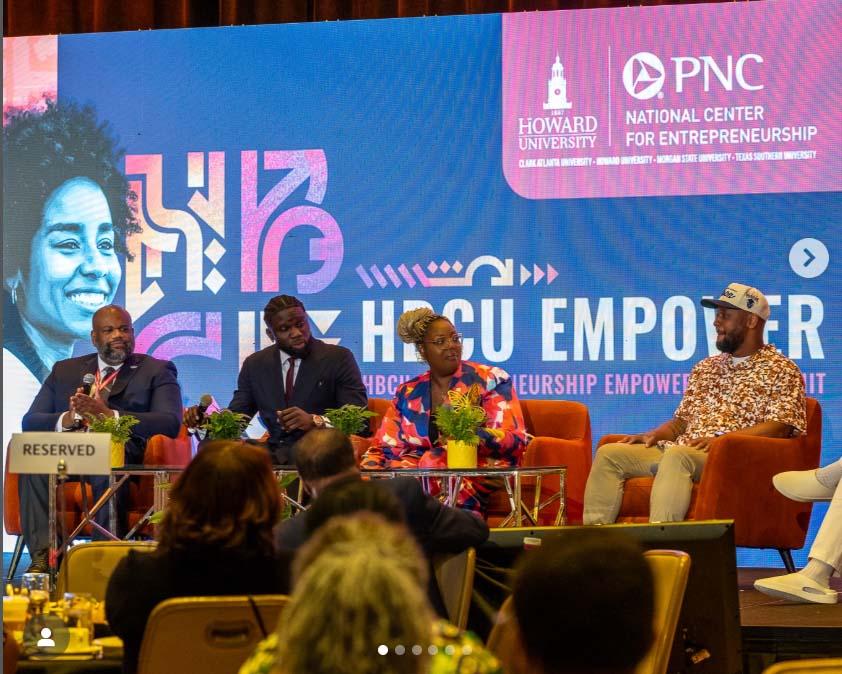
When the PNC Foundation awarded Howard University a landmark $16.8 million grant in 2021, the vision was bold: build a national hub capable of elevating entrepreneurship across the nation’s over 101 historically Black colleges and universities. Four years later, the investment that created the Howard University and PNC National Center for Entrepreneurship stands as one of the university’s most significant and far-reaching success stories.
“The Center has positioned the university as an emerging thought leader in entrepreneurship,” said National Executive Director Dr. Johnny Graham.“By offering specialized programming, funding, and resources, we’re championing entrepreneurs by giving them the tools they need for sustained success.”
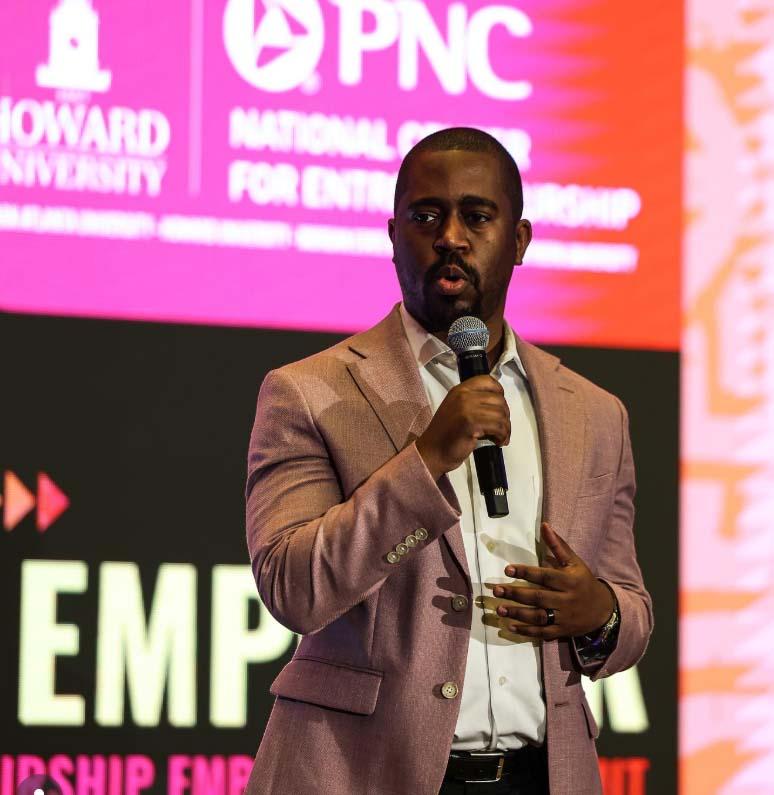
That same vision is echoed by Howard University School of Business Dean Anthony Wilbon. He described the Center as “a testament to what happens when vision meets opportunity,” noting that its growth reflects Howard’s commitment to unlocking entrepreneurial potential across the HBCU community.
“With the support of the PNC Foundation, we set out to build a hub that could unlock the entrepreneurial spirit across the HBCU community, and the results have been extraordinary,” Wilbon said.
In four years, the Center has reached more than 75% of all HBCUs, awarded over $450,000 in venture funding, supported thousands of students, alumni, and community founders, and helped ventures grow from imagination into capital-ready businesses.
Howard’s leadership comes not a moment too soon. Across the country, small businesses are navigating rising costs, evolving technology, and shifting markets
“A lot of entrepreneurs right now are strategizing how to stay open,” Graham said. “They’re working to better monetize their skill sets, understand AI, or rethink sustainable growth. We’re evolving our programming to meet their needs.”
The Center also supports regional programming through four HBCU partners: Howard, Morgan State University, Clark Atlanta University, and Texas Southern University. Each leads its respective four-to-six state region to coordinate programs and activities across all HBCUs.
At Howard, campus programming includes recurring Mecca Marketplace pop-ups where student-founders test and sell products, a Howard Entrepreneurship Week each March, and the Prime Incubator program, which begins its second cohort in January. The Center also hosts its HBCU Empower Conference each June, drawing in entrepreneurs, investors and innovators from around the country.
Other major programs include alumni and community offerings, such as the Idea-to-App Accelerator offered through bootcamps, webinars, and off-site sessions. Other major programs include alumni and community offerings such as the Social Enterprise Bootcamp, Idea to App Accelerator, online webinars, and in-person skill training events.
“At Howard, we’ve helped to create a campus that celebrates the entrepreneurial mindset,” Graham said. “Students arrive already believing they can build something. We give them the tools and resources to do it.”
And there is more on the horizon. The new Startup Skills Academy, launching this year, will offer noncredit courses for students, alumni, and community members on topics such as AI essentials, financing fundamentals, and marketing strategy. Other upcoming initiatives include the Franchise Ownership Bootcamp and new cohorts of the Dreams to Dollars Academy, an entrepreneurship training program designed for early-stage and idea-stage founders across the HBCU ecosystem.
“We’re just getting started,” Graham said. “The genius exists in our community. Our role is to connect and amplify it, then strategically invest to fuel lasting, impactful success.”
Article ID: 2641